Responsible Gambling for UFC Futures: UK Safeguards and Self-Management Tools
 Available in US
A few years into my UFC betting career, I realised I was checking odds at three in the morning. Not because I had a bet settling — nothing was happening at that hour — but because the habit had crept in without my noticing. That was my signal to step back, review my limits, and engage with the tools that exist specifically for moments like that. Responsible gambling is not a disclaimer I tack onto the end of an article. It is a practice I maintain actively, and it is especially important in futures betting, where the long settlement timelines create unique psychological pressures that fight-night bettors do not face.
UKGC-Mandated Safeguards for Online Betting
The UK Gambling Commission oversees a gambling industry with a total gross gambling yield of 16.8 billion pounds in the year to March 2025. The scale of the market — with UK betting and gaming receipts for 2025/26 totalling 1,786 million pounds in the April-through-August period alone — means the regulatory framework has to be robust, and the safeguards available to bettors are among the most comprehensive in the world.
Every UKGC-licensed bookmaker is required to offer deposit limits. You can set a daily, weekly, or monthly cap on how much money you can add to your account. Once the limit is hit, the platform must block further deposits until the next period. For futures bettors, setting a monthly deposit limit is particularly useful because it prevents the temptation to chase losses by adding funds after a futures bet is settled as a loser. The emotional response to a lost futures bet — especially one you held for months — can be intense, and a deposit limit acts as a circuit breaker during that vulnerable moment.
Loss limits function similarly but focus on net losses rather than deposits. If your cumulative losses reach your preset threshold within a given period, the platform restricts further betting. Cooling-off periods allow you to temporarily suspend your account for 24 hours, 48 hours, a week, or a month. During a cooling-off period, you cannot log in or place bets, but your account is not closed — it reactivates automatically when the period ends. For bettors who recognise that they are making impulsive decisions, the cooling-off period is the fastest way to create distance between the impulse and the action.
Reality checks are a subtler tool. Licensed platforms must offer pop-up notifications that remind you how long you have been logged in and how much you have wagered during the session. These notifications are easy to dismiss, but they serve an important function: they break the flow state that can develop during extended sessions of odds comparison and market analysis, where the line between disciplined research and compulsive checking can blur.
Responsible Gambling Challenges Unique to Futures Bets
Futures betting creates psychological dynamics that standard fight-night wagering does not, and recognising them is the first step toward managing them.
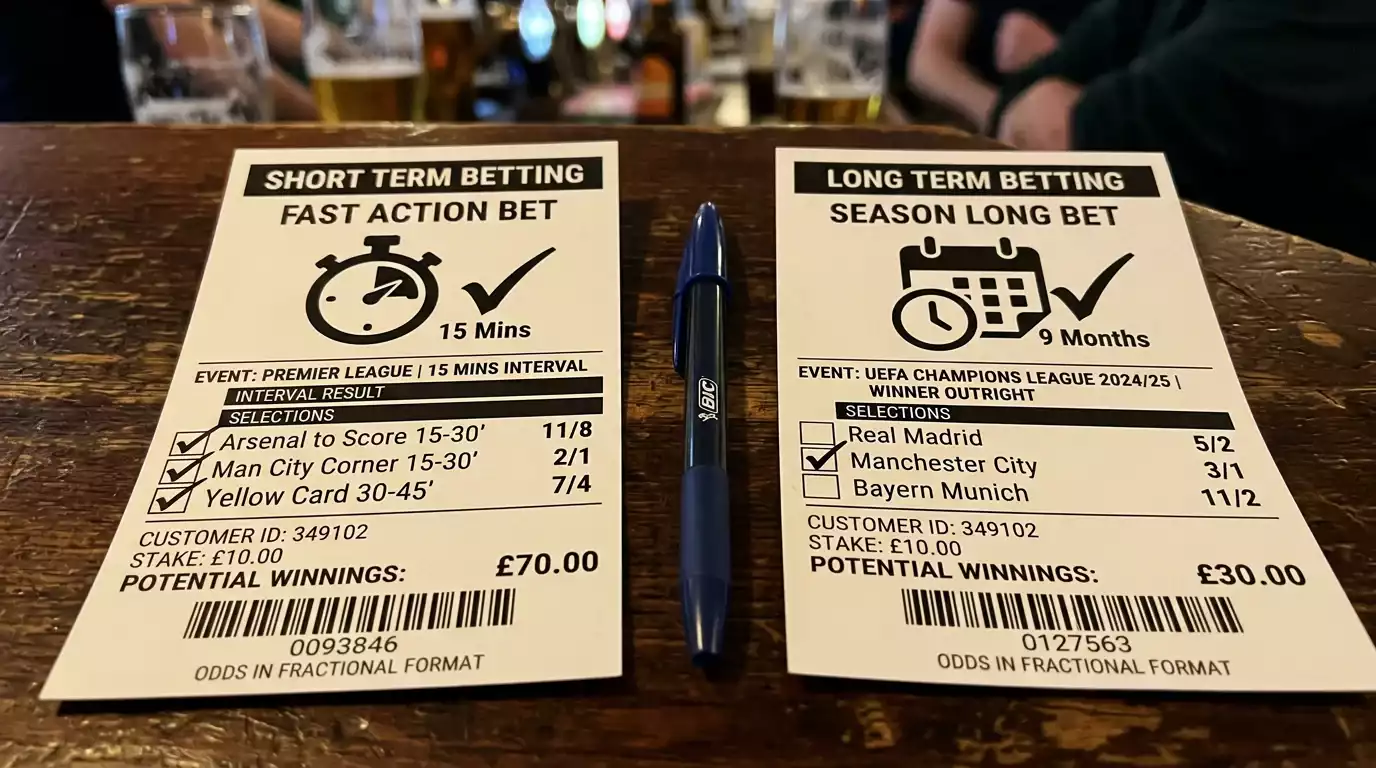
The extended settlement timeline is the primary challenge. When you place a moneyline bet, the emotional cycle is compressed: anticipation, the event, the result, and the emotional response all happen within a single evening. Futures bets stretch that cycle over months. You might hold a position for four or five months, checking the odds periodically, watching your contender’s fights, and experiencing repeated cycles of hope and anxiety before the bet finally settles. That prolonged emotional engagement can become consuming, and it can distort your perception of risk. A futures bet that felt like a calculated position when you placed it in January can feel like a personal crusade by June.
The sunk-cost trap is another challenge. When you have held a futures position for months and it is not going well — your contender lost a fight, the champion looks dominant, the odds have drifted against you — the temptation is to double down rather than accept the loss. Adding money to a losing futures position is rarely rational, but the emotional investment created by months of holding the bet makes it feel like you are “so close” to a payoff that walking away would be wasteful. Setting a clear rule — no additional stakes on open futures positions, ever — eliminates this temptation entirely.
Capital lock-up creates a third pressure. The UFC’s year-round calendar of 43 events means there is always another opportunity, always another contender to back, always another market opening after a title change. When a significant portion of your bankroll is locked in unsettled futures, the urge to deposit additional funds to take advantage of new opportunities can override your original staking plan. The deposit limits discussed above are the practical solution, but the underlying discipline is recognising that missing an opportunity is not a loss — it is simply a bet you did not place.
Where to Get Help: UK Gambling Support Resources
If you recognise any of the patterns described above in your own behaviour, or if someone close to you has expressed concern about your betting, the UK has a well-established support infrastructure.
GamCare provides free information, advice, and support for anyone affected by gambling. Their helpline is available seven days a week, and they offer live chat, email support, and face-to-face counselling through a network of local providers. The National Gambling Helpline is operated by GamCare and provides confidential support.
GAMSTOP is the UK’s free self-exclusion scheme. Registering with GAMSTOP blocks you from all UKGC-licensed online gambling sites for a period of your choosing: six months, one year, or five years. The exclusion is comprehensive and cannot be reversed before the chosen period expires. For bettors who need a hard stop, GAMSTOP provides one.
Gambling Therapy offers a global support service with online counselling, forums, and resources for people affected by gambling. Their services are free and available in multiple languages.
Each of these services exists because the gambling industry — including the UFC betting market that generates part of that 16.8 billion pounds in UK GGY — carries inherent risks that regulation alone cannot eliminate. The tools are there. Using them is not a sign of weakness; it is a sign that you are managing your engagement with the same discipline you bring to your betting strategy. For practical approaches to keeping your staking within sustainable limits, the bankroll management guide covers the financial discipline side of the equation.
How do I set deposit limits for UFC betting on UK bookmakers?
Every UKGC-licensed bookmaker provides deposit limit controls in your account settings, typically under a section labelled ‘Responsible Gambling,’ ‘Safer Gambling,’ or ‘My Account.’ You can set daily, weekly, or monthly deposit caps. Decreasing a limit takes effect immediately, while increasing a limit requires a cooling-off period (usually 24-72 hours) before the change is applied. This asymmetry is deliberate — it prevents impulsive decisions to increase your limits in the heat of the moment.
Can I self-exclude from only UFC futures markets without closing my entire account?
Most UK bookmakers do not offer market-specific self-exclusion. The self-exclusion tools available through individual bookmakers and through GAMSTOP apply to your entire account across all sports and bet types. If you want to stop betting on UFC futures specifically while continuing to bet on other sports, the most practical approach is to set a cooling-off period during UFC events or to use deposit limits that restrict your total betting activity to a level where UFC futures spending is naturally constrained. For a complete break, GAMSTOP excludes you from all UKGC-licensed platforms simultaneously.
Written by the editors at ufc Futures Bets.