UFC PPV Records and Betting: How Marquee Events Distort Futures Odds
 Available in US
The night Khabib Nurmagomedov fought Conor McGregor at UFC 229, I placed three separate bets. One was a moneyline on the fight itself. The other two were futures positions on lightweight contenders whose odds I expected to shift in the aftermath, regardless of who won. The event drew 2.4 million pay-per-view buys and generated approximately 180 million dollars in revenue — numbers that dwarfed every other UFC event before or since. What I learned from that night was not just about the fight itself. It was about how an event of that magnitude warps the entire futures landscape around it, creating both traps and opportunities that persist for weeks after the final bell.
The Biggest UFC PPV Events and Their Betting Handles
UFC 229 remains the all-time PPV record, and its betting handle was proportionally massive. When 2.4 million households are watching a fight, the casual betting volume multiplies dramatically — people who never normally wager on MMA place bets because the event has crossed from sport into spectacle. That influx of casual money distorts the odds in ways that experienced futures bettors can anticipate and exploit.
The second tier of marquee events — cards headlined by fighters like Jon Jones, Amanda Nunes, and Israel Adesanya in their prime — typically drew between 500,000 and 900,000 PPV buys. These events generated substantial betting volume but not the cultural-event volume of UFC 229. The betting distortion at this level is more subtle: the champion’s odds shorten modestly in the days before the event as casual money flows in, and the contender field’s odds drift slightly outward to compensate.
UFC 243 holds the live attendance record at 57,127 fans in Melbourne, which translated into outsized betting volume from the Australian market. That geographical concentration of interest created an interesting pricing phenomenon: Australian-facing bookmakers adjusted their lines more aggressively than UK or US platforms, producing cross-market discrepancies that sharp bettors in other regions could exploit. The lesson is that PPV records are not just about total viewers — they are about where those viewers are concentrated and which bookmakers respond to the regional demand.
The pattern across all of these events is consistent. When viewership exceeds roughly 800,000 buys, the casual betting volume becomes large enough to meaningfully move futures lines. Below that threshold, the betting market remains dominated by regular MMA bettors whose activity produces more efficient pricing. The threshold matters because it tells you when to expect distortion and when the market is likely to price things accurately.
How High-Volume Events Distort Championship Futures Lines
The distortion mechanism is straightforward. Casual bettors overwhelmingly back fighters they recognise, and they back them on name recognition rather than analysis. When a champion defends their title on a massive PPV card, the post-fight futures line on that champion tightens — their odds shorten because casual money floods in on the assumption that a dominant defence means continued dominance. The contender field’s odds lengthen proportionally, creating value on challengers who were fairly priced before the event.
I have tracked this effect across a dozen major PPV cards, and the pattern holds with remarkable consistency. A champion who defends on a card with over a million buys sees their futures odds shorten by an average of 15-25% in the 72 hours after the event. A champion who defends on a regular Fight Night card — which draws no PPV buys and reaches a smaller audience — sees their odds shorten by only 5-10%. The difference is entirely driven by casual money, not by any change in the champion’s actual probability of retaining their belt.
The reverse distortion occurs when a champion loses on a marquee card. The upset generates enormous media coverage, and the new champion’s odds are set in an environment of heightened attention. Casual money floods in on the new champion — because the upset narrative is compelling and widely covered — while the futures market for the rest of the division drifts into less efficient territory. Average UFC PPV buys are now estimated at 300,000 per event, down from 447,000 in 2018, as the promotion transitions to its Paramount+ subscription model under a 7.7 billion dollar deal. That transition is gradually reducing the magnitude of PPV-driven distortions, because fewer households are paying per event and more are watching through a subscription that does not produce the same spikes in casual attention.
Finding Futures Value Around Major PPV Cards
The actionable framework I use around major PPV events has three phases, and each phase offers a different type of opportunity.
Before the event, the pre-fight hype drives casual money toward the headlining fighters. If the main event features a championship fight, both the champion and the challenger will see their odds tighten as casual bettors pile in. The rest of the division’s contender field gets less attention, and their odds may drift outward slightly. If I have a contender I have been watching — someone ranked third or fourth whose odds were already close to my value threshold — the week before a major PPV is often when their price crosses into profitable territory. The casual money is flowing elsewhere, and the bookmakers are not actively adjusting the mid-tier contenders’ lines.
During the event, the fight result determines the post-fight landscape. If the champion wins, I prepare to evaluate whether the post-fight odds tightening on the champion overshoots. If the champion loses, I prepare to evaluate whether the new champion’s odds are being set too aggressively. Either way, I do not act during the event itself — the odds are in flux, the bookmakers are adjusting in real time, and the post-event lines need 48 to 72 hours to stabilise.
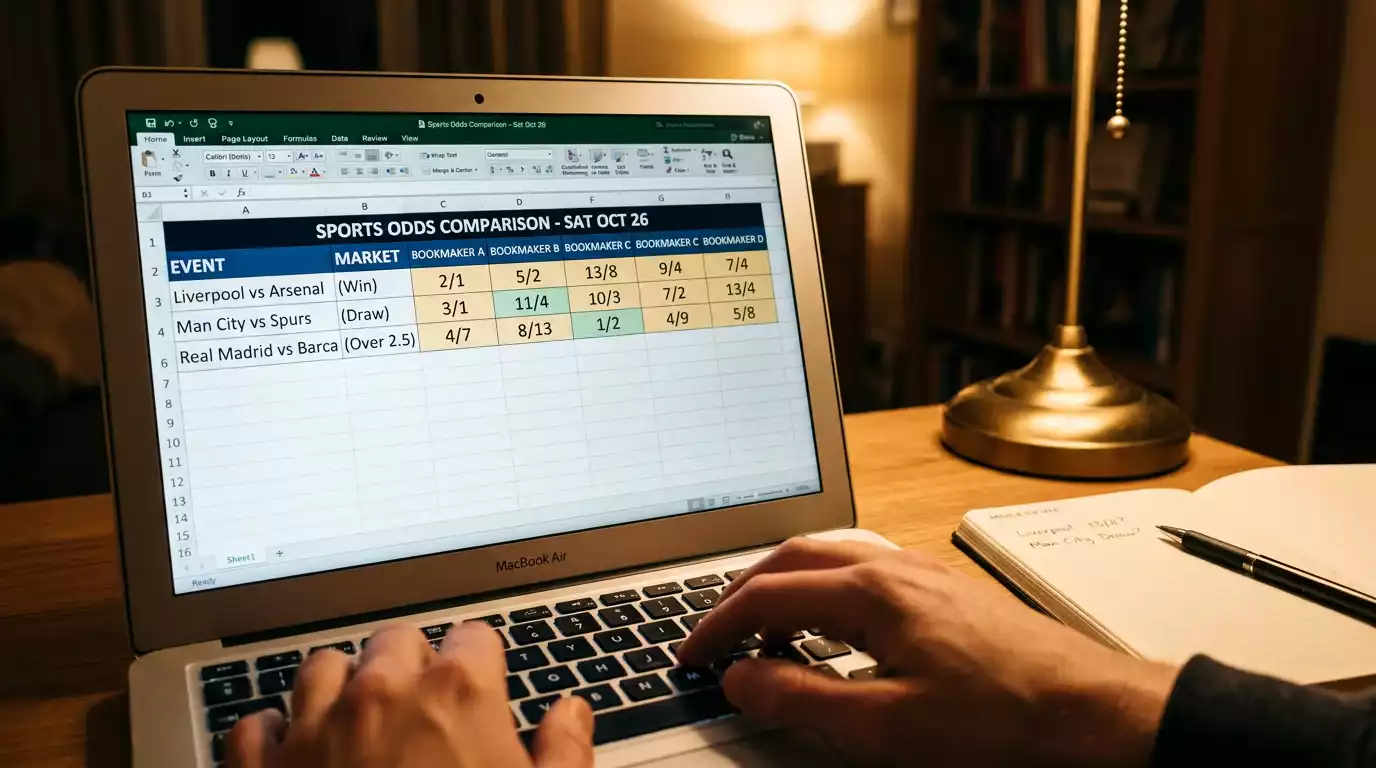
After the event, I compare the new odds across multiple bookmakers against my pre-event assessments. The specific question I am asking is: has the result changed the division’s competitive reality, or has it only changed the market’s perception? If a dominant champion won by first-round knockout, the competitive reality has arguably shifted in the champion’s favour and the tighter odds may be justified. If the same champion won a close split decision, the competitive reality has barely changed but the market may price the win as if it were dominant, because casual viewers do not distinguish between a clear victory and a narrow one. The gap between reality and perception is where the value lives.
The streaming transition is gradually changing this dynamic. As the UFC moves more events behind its Paramount+ paywall, the PPV-specific spikes in viewership are flattening. Events that would have drawn 600,000 PPV buys now draw subscribers who were already watching, and the casual-money influx is smaller and more spread across the calendar. For a deeper look at how this structural shift is reshaping the entire betting landscape, the analysis of the streaming transition’s impact on betting covers the longer-term implications.
Do UFC PPV events generate significantly more betting volume than Fight Night cards?
Yes. PPV events draw larger and more casual audiences, which translates into higher betting volume and more inefficient pricing. The effect is most pronounced on events exceeding roughly 800,000 buys, where the casual money becomes large enough to meaningfully move championship futures lines. Fight Night cards, which are broadcast on free or subscription television, attract primarily regular MMA bettors whose activity produces tighter, more efficient markets. The volume gap between a major PPV and a standard Fight Night can be several multiples.
Can I find better futures value before or after a major PPV title fight?
Both windows offer value, but the mechanisms differ. Before a PPV, casual money flows toward the headlining fighters, which can push mid-tier contenders’ odds outward and into value territory. After a PPV, the market’s reaction to the result may overshoot — tightening the winner’s odds too aggressively or overcorrecting against the loser. The post-event window of 48 to 72 hours is typically more productive because the distortion is larger and more measurable, but it requires patience and a pre-existing view of the division to act decisively.
Written by the editors at ufc Futures Bets.