UFC Futures and Fight Cancellations: What Happens to Your Bet When Plans Change
 Available in US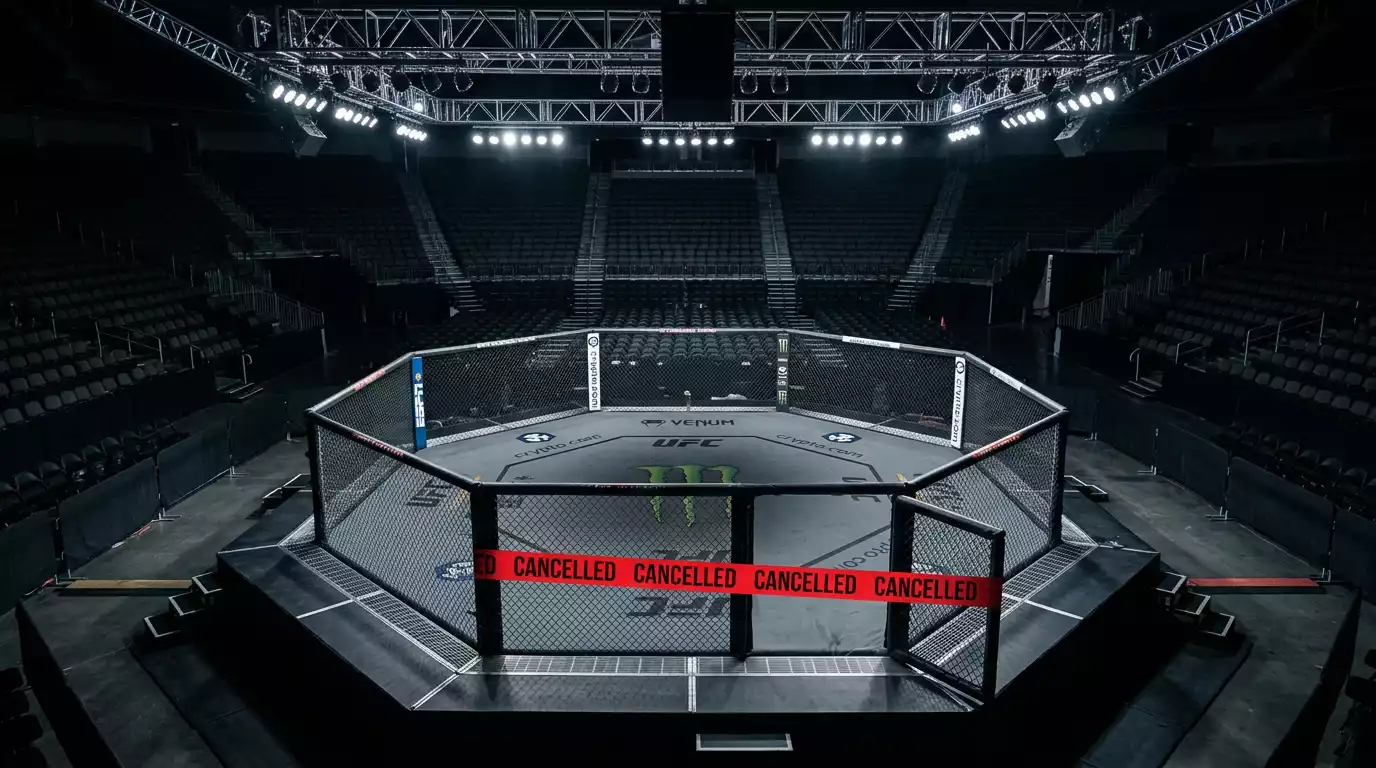
I had a futures bet sitting comfortably on a welterweight contender when the news broke: the title fight he was one win away from challenging for had been pulled due to an integrity alert. Dana White confirmed the cancellation with a single sentence — “I got called by the gaming integrity service, and I said, ‘I’m not doing this again.’ So we pulled the fight.” My bet was not on that fight, but the ripple effect through the division delayed my contender’s path by months. Cancellations in the UFC are not rare edge cases. They are a recurring feature of the sport, and understanding how they affect your futures positions is essential to managing your exposure.
Types of Cancellations That Affect Futures Bets
Not all cancellations are created equal, and the type determines what happens to your money. I break them into four categories based on how they interact with futures markets.
Injury pull-outs are the most common. A fighter tears an ACL, breaks a hand in training, or fails a pre-fight medical. The fight is scrapped or rescheduled with a replacement opponent. For futures bettors, an injury to the champion typically pauses the division — no title fight means no settlement opportunity for anyone holding futures in that weight class. An injury to your specific contender is worse: if they were on the verge of a title shot, the injury can push them back months in the queue, and other contenders may leapfrog them during recovery. Most bookmakers do not void futures bets due to a fighter’s injury unless the fighter retires or is medically retired.
Integrity-related cancellations are rarer but more disruptive. Ontario’s AGCO ordered all sportsbooks to stop offering UFC bets entirely in late 2022 after the James Krause scandal. The ban was lifted weeks later, but it demonstrated that regulatory intervention can freeze an entire sport’s betting markets with no warning. Individual fight cancellations due to integrity alerts, like the UFC 324 incident, disrupt the specific division’s contender timeline and can taint the reputation of fighters involved, even if no wrongdoing is ultimately proven.
Weight-miss cancellations affect title eligibility specifically. When a fighter misses weight for a championship bout, the fight may proceed but only the opponent on weight can win the belt. If the champion misses weight, the title is typically stripped. If the challenger misses weight, they become ineligible to win the belt even if they win the fight. For futures bettors, a weight miss by a contender you have backed effectively kills the bet’s championship pathway for that specific fight, because a win does not produce a title change. The bet remains open, but your contender now needs another fight to get back on the championship track.
Voluntary withdrawals — where a fighter or champion chooses not to compete due to contract disputes, personal reasons, or a move to a different weight class — create the most ambiguous outcomes. The settlement rules vary by bookmaker and by the specific wording of the futures market. Some operators void the bet when a fighter voluntarily withdraws from their division. Others keep the bet alive on the grounds that the fighter has not formally retired.
How UK Bookmakers Handle Voided UFC Futures
The settlement rules for cancelled or disrupted UFC futures vary between UK bookmakers, and the differences can mean the difference between getting your stake back and losing it. After years of dealing with these situations, I now read the specific settlement rules for every futures market before placing a bet. It takes two minutes and has saved me real money.
The general principle across most UK-licensed operators is that a futures bet remains live as long as the outcome is still theoretically possible. If you backed Fighter A to be the next lightweight champion and Fighter A is still an active UFC lightweight, the bet stays open regardless of cancellations, delays, or reshuffles in the division. The bet only settles when either Fighter A wins the lightweight championship (win), another fighter wins the lightweight championship (loss), or Fighter A leaves the division, retires, or is released from the UFC (void, usually with stake returned).
Where bookmakers diverge is on the edge cases. Some operators void futures bets if the settlement date passes without a title fight having taken place in that division — for “champion at year-end” markets, this would mean voiding the market if no title fight occurs before the deadline. Others settle the market based on whoever holds the belt on the specified date, even if no title fight has occurred (meaning the reigning champion wins the market by default). The difference between these approaches is significant: one gives you your money back, the other awards it to the champion who held the belt through a quiet period.
Online real-event betting GGY in the UK increased to 596 million pounds in Q4 2024/25 across 13.5 million monthly active accounts, which means millions of bettors are navigating these settlement rules across multiple platforms. The scale of the market is large enough that bookmakers generally publish their UFC futures settlement terms clearly, but the terms are platform-specific and not standardised across the industry. Do not assume that the rules you are familiar with on one bookmaker apply to another.
Steps to Protect Your Position When Cancellations Loom
Prevention is more practical than cure when it comes to cancellation risk. Over the years I have developed a checklist that I run through before placing any futures bet, and the cancellation-related items have become some of the most important.
First, check the fighter’s injury history. A contender who has been pulled from fights before is statistically more likely to be pulled again. If your futures assessment depends on a clean path to the title, factor in the probability of a disruption and adjust your stake accordingly. I reduce my standard stake by 20-30% for fighters with a history of injury-related cancellations, because the increased settlement risk reduces the expected value of the position.
Second, monitor the training camp. Social media, MMA media reports, and training footage all provide signals about a fighter’s physical condition in the weeks before a fight. A fighter who goes quiet on social media during camp, who changes training partners unexpectedly, or who is rumoured to be dealing with an injury may be at elevated risk of a pull-out. These are soft signals, not hard data, but they are worth tracking when you have capital at risk in a futures position.
Third, know your bookmaker’s cash-out policy for futures. Some UK operators offer early cash-out on open futures positions, which allows you to exit a bet at a reduced profit (or reduced loss) before settlement. If you see warning signs that a cancellation is likely, checking whether a cash-out option is available lets you take money off the table before the event. The cash-out price will not be generous — the bookmaker prices their margin into the cash-out offer — but recovering 60-70% of a position’s current value is better than watching it evaporate due to a cancellation you could have anticipated.
Fourth, diversify across divisions. Concentrating your futures positions in a single weight class exposes you to division-specific cancellation risk. If you hold three futures bets in lightweight and the champion gets injured, all three positions are delayed simultaneously. Spreading your futures positions across two or three divisions reduces the impact of any single disruption. For more on how the broader settlement timeline is shaped by these types of events, the analysis of how long UFC futures bets take covers the full range of settlement scenarios.
Do UK bookmakers refund futures bets when a UFC fight is rescheduled rather than cancelled?
Generally, no. A rescheduled fight does not void or refund a futures bet because the outcome is still achievable — just delayed. Your futures bet remains open until the fight is either completed, permanently cancelled, or the fighter leaves the division. Rescheduling extends your settlement timeline but does not change the bet’s status. The only scenario where a rescheduled fight might trigger a void is if the rescheduling pushes the fight past the settlement date on a time-bound market like ‘champion at year-end.’
What happens to my futures bet if a champion moves up a weight class?
When a champion vacates to move up a weight class, the treatment depends on the bookmaker and the market type. For ‘next champion’ markets, the bet typically stays open — the UFC will book a vacant title fight, and your wager settles based on the result. For ‘champion at year-end’ markets, the bet remains open until the settlement date, and whoever holds the belt at that point determines the outcome. If your specific pick is the fighter moving up, some bookmakers void the bet and return your stake, while others settle it as a loss. Check the settlement terms before placing the bet.
Created by the ”ufc Futures Bets” editorial team.