UFC Betting Integrity Scandals: How They Reshape Futures Markets
 Available in US
In early 2023, I had three open UFC futures positions when the news broke that the UFC had partnered with Integrity Compliance 360 to monitor wagering activity across all events. My first reaction was relief — finally, someone was taking the betting integrity problem seriously. My second reaction, about ten minutes later, was to check whether any of my open positions were in divisions where integrity questions had been raised. One of them was.
Betting integrity is not a peripheral concern for futures bettors. It is a structural risk that affects market liquidity, odds pricing, and the fundamental reliability of the competitive outcomes you are wagering on. The UFC has faced multiple integrity incidents over the past four years, from the James Krause coaching scandal to the Dulgarian case to fighters publicly reporting that they were offered money to throw fights. Each incident sent ripples through the betting market — and each one reshaped how I evaluate the risk profile of a futures position.
This is not a scandal sheet. What I want to do here is trace the timeline of integrity cases, explain how the monitoring infrastructure evolved in response, examine the structural conditions that make combat sports uniquely vulnerable, and — most importantly for your purposes — show how integrity events affect the futures markets where your money sits. The UFC partnered with IC360 in January 2023, and the monitoring landscape has changed substantially since then. Understanding that landscape is part of being a serious futures bettor, not an optional add-on.
A Timeline of UFC Betting Integrity Cases
The modern era of UFC betting integrity concerns begins with James Krause. Before Krause, there were occasional rumours and anecdotal reports about suspicious betting patterns on UFC events, but nothing that produced a systematic response from the organisation. The Krause case changed that — not because it was the first instance of suspected insider activity, but because it was the first one that triggered regulatory action from outside the UFC.
Krause was a UFC fighter and coach whose betting activities drew attention from multiple state gaming commissions and federal investigators. The details that emerged painted a picture of an insider — someone with direct knowledge of fighters’ conditions, strategies, and preparation — placing bets on outcomes he had privileged information about. The case raised questions that went beyond one individual: how many other coaches, cornermen, or training partners had access to the same kind of information and the same opportunity to act on it?
The regulatory response was swift and, for bettors, alarming. In late 2022, Ontario’s AGCO ordered all sportsbooks operating in the province to stop offering UFC bets entirely. The suspension was brief — reinstated weeks later after the UFC implemented a blanket ban on all insiders betting on UFC events — but it demonstrated something that futures bettors need to internalise: regulators have the power to shut down an entire sport’s betting market if integrity concerns reach a threshold. Open futures positions during such a suspension sit in limbo, subject to individual bookmaker policies on void bets and refunds.
The Dulgarian case, which unfolded more recently, added another layer. Dana White, the UFC’s CEO, stated publicly that IC360 “reached out and told us there was some unusual action going on with that fight.” White’s response was characteristically blunt: the organisation investigated, pulled the fighter, and White warned that anyone involved in fight-fixing should expect the UFC to “do everything we can to make sure you go to prison.” Whether or not the Dulgarian case resulted in confirmed wrongdoing, the market impact was real — odds on that event shifted, liquidity dried up temporarily, and bettors who had positions on the affected card faced uncertainty about settlement.
Beyond the headline cases, there is a pattern of fighters reporting approaches. Vince Morales, a UFC veteran, publicly claimed he was offered $70,000 to throw a fight. Vanessa Demopoulos also reported receiving offers. These reports are significant not because they prove systemic corruption — they do not — but because they confirm that the incentive to fix fights exists and that the approaches are happening at levels of the sport that directly affect betting markets. A preliminary card fighter being offered money to lose is a different kind of risk than a championship fight being compromised, but both affect the integrity of the markets that futures bettors participate in.
The timeline, taken as a whole, shows an escalating awareness rather than an escalating problem. It is possible that fight-fixing attempts have always existed in MMA and are only now being detected because the monitoring infrastructure has improved. That interpretation is more reassuring than the alternative — but it still means that futures bettors need to factor integrity risk into their decision-making, particularly in lower-profile divisions and on preliminary cards where monitoring coverage and public scrutiny are thinner.
What distinguishes the UFC’s integrity challenges from those in team sports is the individual nature of the competition. In football, fixing a match requires coordinating multiple players, which increases the chance of detection. In MMA, a single fighter can influence the outcome of a single bout, which makes the logistics of corruption simpler and the detection harder. That structural difference does not make UFC fights more likely to be fixed in practice — the monitoring is specifically designed to account for it — but it does mean that the type of integrity risk is qualitatively different from what bettors encounter in team sports markets.
The Monitoring Response: From the Krause Scandal to the IC360 Launch
The Krause scandal forced the UFC to move from reactive to proactive on betting integrity, and the centrepiece of that shift was the partnership with IC360, launched in January 2023. Dana White has described the arrangement in straightforward terms: “We’re watching every fight that happens in the UFC, from the first prelim to the main event. IC360 monitors all of the betting. They’re the best in the business.”
IC360 operates by tracking wagering patterns across multiple sportsbooks in real time during UFC events. When the system detects unusual activity — a sudden surge of money on a specific outcome, a pattern of bets that is inconsistent with public form data, or coordinated wagering across multiple platforms — it flags the event for investigation. The alert does not mean a fight is fixed; it means the betting patterns deviate from what the model expects. The UFC then investigates the flag, which can involve contacting the fighter, their team, and their management to determine whether there is an innocent explanation.
Sportradar, the broader sports data company that provides integrity services across dozens of sports globally, has also expanded its UFC coverage. The company’s integrity services revenue reached EUR 4.2 million in Q3 2025, a 103% increase year-on-year, reflecting the growing demand for wagering surveillance across combat sports and other markets. That revenue growth tells you something about the scale of investment that the industry is making in monitoring — and about the scale of the problem that prompted it.
The practical impact for futures bettors is twofold. First, the existence of robust monitoring should increase your confidence that championship-level fights — the outcomes your futures bets depend on — are being scrutinised for integrity. Title fights attract the most betting volume, the most public attention, and the most monitoring resources. The risk of a compromised championship bout is lower than at any other level of the card, which is relevant if your futures thesis depends on competitive outcomes at the top of the division.
Second, the monitoring system itself generates market-moving information. When IC360 flags an event and the UFC responds — by cancelling a fight, suspending a fighter, or announcing an investigation — the futures market for that division adjusts. The detailed breakdown of how IC360’s surveillance system operates covers the mechanics in depth. For this guide, the key point is that integrity alerts are now a category of information that futures bettors need to monitor alongside fight results, injury reports, and ranking changes.
Fighter Pay Disparity as a Structural Integrity Risk
Why would a professional athlete risk their career and criminal prosecution to fix a fight? The answer, uncomfortable as it is, often comes down to money — specifically, the gap between what UFC fighters earn and what athletes in other major sports take home.
UFC athletes receive approximately 16-20% of organisational revenue. In the NBA, NFL, and NHL, the equivalent figure is around 50%. The UFC generated $1.502 billion in revenue for the full year 2025, with an Adjusted EBITDA margin of 57%. Those are excellent business numbers, but they also mean that a significant portion of the revenue generated by fighters’ performances flows to the organisation rather than to the athletes themselves. A fighter on the preliminary card of a major event might earn $12,000 to show and $12,000 to win — before taxes, training camp costs, coaching fees, and manager commissions. The net take-home can be shockingly low for someone whose job involves getting punched in the face on international television.
That financial pressure creates a structural vulnerability. A fighter who is earning a modest living and facing the physical costs of competition is more susceptible to an offer of $50,000 or $70,000 to influence an outcome than an NBA player earning $5 million per season. This is not an excuse for corruption — it is an explanation of the economic conditions that make it more likely to occur. As a futures bettor, you should understand this dynamic because it shapes the risk profile of the markets you are participating in.
The structural risk is concentrated at the lower end of the card. Championship-level fighters earn significantly more than preliminary card fighters, which reduces — though does not eliminate — the financial incentive for manipulation at the top. For futures bettors, this is moderately reassuring: the outcomes that matter most for championship futures are contested by fighters who have less economic motivation to compromise. But the pipeline matters too. A contender on the rise might pass through the lower-earning stages of their career, and their path to the title shot involves fights where the integrity risk is higher. If your futures thesis depends on a specific contender winning three more fights to reach the championship, the integrity profile of those intermediate fights is relevant to your position’s expected value.
There is also a subtler dynamic at play. Fighters who feel undercompensated may make career decisions that disrupt the competitive landscape without any corruption being involved. A top contender who holds out for better pay, refuses a fight against a dangerous opponent because the money is not sufficient, or moves to a different promotion entirely can alter a division’s futures market as dramatically as a fixed fight. These decisions are entirely legitimate, but they represent a form of volatility that is rooted in the same pay structure that creates integrity risk. Futures bettors need to track not just whether a fighter is winning but whether they are satisfied with their compensation — because dissatisfied fighters make unpredictable career choices.
How Integrity Alerts Affect Futures Odds and Liquidity
When the AGCO suspended UFC betting in Ontario in 2022, the market response was immediate and instructive. Sportsbooks operating in the province pulled all UFC markets — not just fight-night bets but futures positions as well. Bettors with open futures had their positions frozen, subject to each bookmaker’s policy on regulatory suspension. Some received refunds; others had to wait until the suspension was lifted weeks later before their bets were restored. The inconsistency was the most damaging part — bettors could not predict how their specific platform would handle the situation.
The UFC responded with an official statement emphasising that “along with the health and safety of our fighters, nothing is more important than the integrity of our sport.” That language was necessary but did not address the practical question futures bettors cared about: what happens to my money when a regulator intervenes?
Integrity alerts that stop short of regulatory suspension still affect futures markets through two channels. The first is liquidity. When an integrity concern becomes public, some bookmakers reduce their exposure by tightening limits on UFC futures bets — accepting smaller maximum stakes or temporarily suspending specific divisional markets. Reduced liquidity means wider spreads and less responsive pricing, which makes it harder to enter or exit positions at fair value.
The second channel is sentiment. Public awareness of integrity issues makes casual bettors more cautious, which reduces the flow of “public money” that typically pushes odds on popular fighters. When public money dries up, the market becomes more dominated by sharp bettors, which generally leads to more accurate pricing but thinner margins. For a futures bettor who relies on public-money mispricings to find value, an integrity scare can temporarily eliminate the very inefficiency you were planning to exploit.
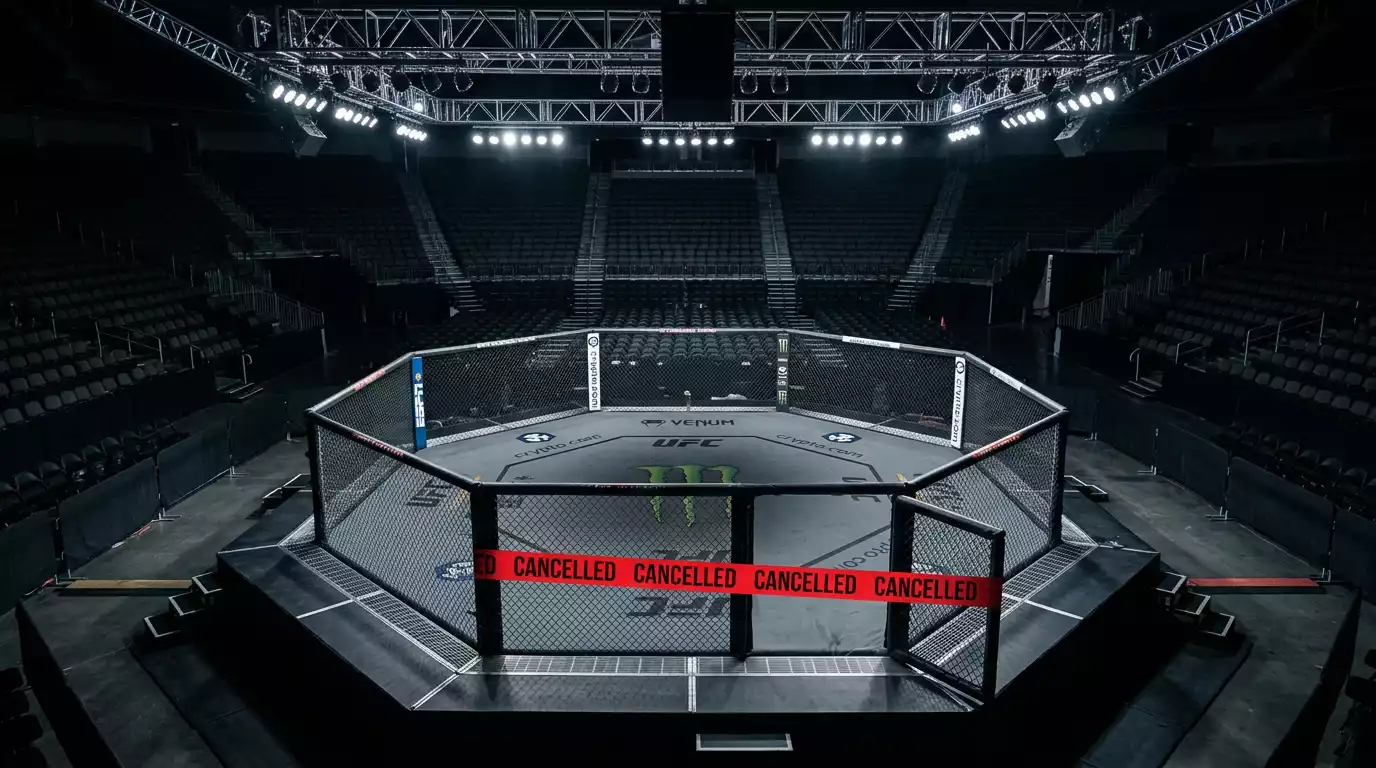
At UFC 324, Dana White cancelled the Johnson vs Hernandez fight after IC360 flagged suspicious wagering activity. White was direct about the process: “I got called by the gaming integrity service, and I said, ‘I’m not doing this again.’ So we pulled the fight.” That cancellation did not affect championship futures directly, but it demonstrated the system working in real time — and it reminded the market that any fight on any card could be pulled if the monitoring infrastructure detects a problem. For futures bettors, the lesson is that your contender’s path to the belt includes fights that are subject to cancellation for integrity reasons, and that risk is not priced into the odds.
What UK Bettors Should Watch For
UK-based futures bettors operate under the UKGC’s regulatory umbrella, which provides a layer of protection that bettors in less regulated markets do not have. But that protection is not absolute, and there are specific things UK punters should monitor to protect their futures positions from integrity-related disruption.
The UK gambling industry’s total Gross Gambling Yield of £16.8 billion gives the UKGC significant regulatory heft. The commission has the resources and the mandate to investigate integrity concerns across all sports offered by licensed operators, including UFC. If the UKGC were to receive evidence of systematic integrity problems in UFC betting — similar to what prompted the Ontario suspension — the regulatory response could affect UK markets. The probability is low, but the impact would be high for anyone holding open futures positions.
What to watch for, practically: follow UFC integrity news as part of your regular market monitoring. When IC360 flags an event, when a fighter is suspended pending investigation, or when a regulatory body in any jurisdiction raises concerns about UFC betting integrity, assess whether the development affects the division where your futures positions sit. Most integrity incidents have been concentrated at the preliminary card level and in lower-profile bouts, which means the direct impact on championship futures is typically limited. But the indirect impact — on market liquidity, bookmaker risk appetite, and public confidence — can ripple through to your positions regardless of whether the specific incident is related to your division.
I also recommend reading the fine print in your bookmaker’s terms and conditions on how they handle integrity-related cancellations and suspensions. Some platforms have specific clauses addressing what happens to futures bets when a fight is pulled for integrity reasons, while others default to general cancellation terms. Knowing how your bookmaker will handle an integrity event before it happens is far better than finding out after the fact when your money is already at stake.
The broader principle is straightforward: integrity risk is a real but manageable component of UFC futures betting. It should not deter you from participating in the market, but it should inform how you size positions, which divisions you concentrate in, and how closely you monitor developments between the time you place a bet and the time it settles. The UFC’s monitoring infrastructure is more robust than it has ever been, and the organisation’s willingness to cancel fights based on integrity alerts — as demonstrated at UFC 324 — shows that the system is not just decorative. But no monitoring system is perfect, and the structural conditions that create integrity vulnerability — particularly the fighter pay gap — have not been resolved. Treating integrity as background noise rather than an active risk factor is a mistake that futures bettors with significant capital at stake cannot afford to make.
UFC Betting Integrity FAQ
Has a UFC fight ever been officially confirmed as fixed?
No UFC fight has been officially confirmed as fixed through a completed legal proceeding as of 2026. Several cases have involved investigations, suspensions, and fighter bans based on suspicious wagering activity and circumstantial evidence, but none have resulted in a definitive ruling of fight-fixing. The James Krause case involved federal investigation into insider betting, and the Dulgarian case prompted a fight cancellation based on IC360 alerts, but both remain distinct from a confirmed fix.
How does IC360 detect suspicious betting activity on UFC events?
IC360 monitors real-time wagering patterns across multiple sportsbooks during UFC events. The system flags deviations from expected betting behaviour — such as sudden surges of money on a specific outcome, coordinated wagering across platforms, or patterns inconsistent with public form data. When a flag is raised, the UFC investigates by contacting the fighter and their team to determine whether there is an innocent explanation for the unusual activity.
What happens to my futures bet if a fight is cancelled due to an integrity alert?
It depends on your bookmaker’s terms and conditions. Some platforms treat integrity-related cancellations the same as any other cancellation — the specific fight is voided but your broader futures position remains open. Others may adjust settlement terms or suspend the market temporarily. The inconsistency across platforms is one of the risks of holding futures positions in a sport where integrity cancellations, while rare, do occur. Check your bookmaker’s specific policies before placing a futures bet.
Are UFC betting integrity measures stricter than in other sports?
The UFC’s post-2023 integrity infrastructure — including the IC360 partnership, the blanket insider betting ban, and the willingness to cancel fights based on wagering alerts — is arguably more aggressive than many team sports. However, combat sports face unique vulnerabilities that team sports do not, including the individual nature of competition and the fighter pay disparity. The measures are stricter in response to a risk profile that is structurally different from sports with larger rosters and higher athlete compensation.
Created by the ”ufc Futures Bets” editorial team.